

Most arguments about roof systems start with price per square foot. A better place to start is the building. You need to know how steep the roof is, what equipment sits on it, how water drains off, and how hard a southeast Michigan winter will push it. A brick storefront with a nearly flat deck, a pole barn, and a warehouse covered in rooftop units will each lead to a different answer.
Three systems cover most of those buildings today: TPO, EPDM, and metal. Each one tends to fail in the same place. TPO depends on its welds. EPDM depends on its adhesives and tape. Metal depends on its fasteners and on whether the panels have room to move. Knowing where each system breaks down tells you more than any lifespan number in a brochure.
The Detroit climate puts extra strain on every one of those weak points. Humid summer stretches in the 90s bake dark surfaces. Winters bring around 40 inches of snow and constant freeze and thaw. Water that ponds in a low spot in November can freeze, expand, and pry at a seam by February.
For owners comparing these systems on a real building, T&M Roofing provides Commercial Roofing across Detroit and the surrounding metro. Its crews install and repair TPO, EPDM, and Metal Roofing on offices, retail spaces, warehouses, and industrial properties. When an existing roof can’t be saved, its New Roof Installation service handles the full tear off and rebuild. If you’re unsure which system your building needs, request a roof assessment and the team will tell you.
How the Three Systems Compare
Lifespan. A well-installed TPO roof usually lasts 20 to 30 years, and the thicker 60 and 80 mil sheets land at the longer end. EPDM has the longest field record of the single-ply membranes, and 25 to 30 years is common. Standing seam metal often passes 40 years. Exposed-fastener metal panels need maintenance well before the steel itself wears out.
Seams and fasteners. TPO seams are welded with hot air, which fuses the two sheets into one piece. A good weld is often stronger than the sheet around it. A cold weld can look fine and still fail later, which is why careful installers probe every seam. EPDM seams rely on primer and seam tape. They hold well if the surface was clean and dry during installation, but they are usually the first place an aging EPDM roof leaks. On exposed-fastener metal, the rubber washers under each screw dry out and loosen over years of heating and cooling. Standing seam avoids most of this. Its fasteners are hidden under the seams, and its clips let the panels expand and contract freely.
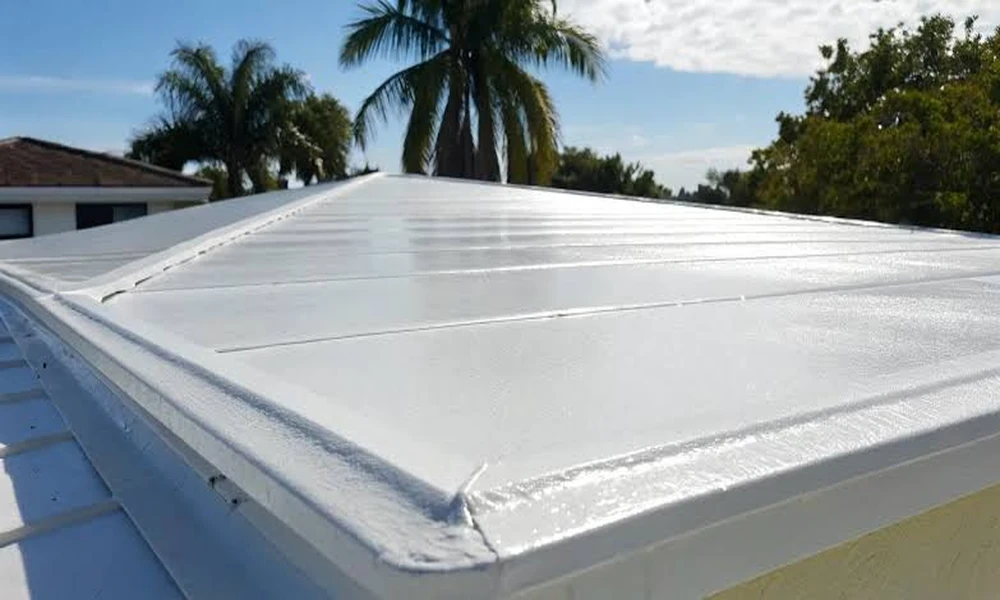
Heat performance. White TPO reflects a large share of sunlight, which lowers rooftop temperatures and summer cooling loads. Standard black EPDM absorbs heat, and white EPDM costs more. Metal with a reflective coating performs close to a white membrane and sheds heat quickly once the sun goes down.
Cold performance. EPDM is a rubber, and it stays flexible well below zero. That is a big reason it earned its reputation on northern roofs. TPO also handles cold well, though thin or aged sheets get stiff and are less forgiving of foot traffic in deep winter. Cold doesn’t hurt metal, but metal moves, and a long panel changes length noticeably between January and July. Many owners worry that a white roof will raise their winter heating bill. The U.S. Environmental Protection Agency notes that this heating penalty is typically offset by summer cooling savings. Part of the reason is that the winter sun sits low, and a snow-covered roof reflects light no matter what color it is.
Repairability. EPDM is the easiest of the three to patch. A clean, primed surface and a cover strip will fix most punctures. TPO repairs easily when it is young. Weathered TPO has to be scrubbed and prepped before new material will weld to it, and some very old sheets won’t accept a weld at all. Metal repairs usually involve fasteners, lap sealant, and flashing. A rusted or badly dented panel is normally replaced rather than patched.
Which Building Each System Suits
| Roof system | Best-fit building | Main trade-off |
|---|---|---|
| TPO | Low-slope commercial roofs with rooftop HVAC and high summer cooling loads | Seam quality depends on the installer, and aged sheets are hard to repair |
| EPDM | Low-slope roofs with few penetrations and tighter budgets | Taped seams and perimeter flashings are the usual leak points |
| Standing seam metal | Pitched roofs on homes, churches, and light commercial buildings | Highest upfront cost, and snow guards are needed over doors and walkways |
| Exposed-fastener metal | Pole barns, garages, and utility buildings | Screws and washers need periodic replacement |
Slope comes first. Membranes are designed for roofs that are nearly flat. Most exposed-fastener metal panels need a pitch of about 3 in 12 or steeper. Mechanically seamed standing seam can be rated for much lower slopes. A low-slope building with parapet walls and interior drains will almost always end up with a membrane.
Snow behavior. Metal sheds snow, which keeps heavy loads off the structure but can drop ice onto a sidewalk. Membranes hold snow in place, so drains and scuppers have to stay clear. Otherwise meltwater backs up under the snowpack.
Rooftop traffic. If technicians service HVAC units on the roof often, TPO or EPDM with walkway pads is the practical choice. Metal is a poor surface for regular foot traffic.
New Installation or Replacement
Recover versus tear off. Sometimes a new membrane can go directly over a single existing roof, which saves on disposal costs. Building codes generally don’t allow a recover when two roofs are already in place, or when the existing roof or insulation is wet. An infrared scan or a few core cuts will show which situation you’re in.
When the deck is open. A full tear off is the only chance to add insulation, fix ponding with tapered boards, and replace soft decking. Code may require bringing insulation up to current levels once the deck is exposed. That adds cost up front but lowers heating bills for the life of the new roof.
Switching systems. Replacing an old built-up or modified bitumen roof with TPO or EPDM is routine work. Converting a low-slope roof to metal usually means reframing it, so that change mostly makes sense in new construction.
Seasonal timing. Membrane adhesives and seam primers have minimum application temperatures. Scheduling the work between spring and early fall keeps the installation within those limits.
The right system is rarely the one that looks cheapest or longest-lasting on paper. It is the one whose weak point the building can live with. A flat warehouse with frequent HVAC traffic needs welded seams that people can walk on. A small flat roof with almost nothing on it can run three decades on rubber. A steep roof that sheds snow onto open ground has every reason to be metal. Once the system matches the slope, the traffic, and the winter, comparing prices gets much simpler.
Slope Decides TPO EPDM Or Metal Long Before Price Does
