
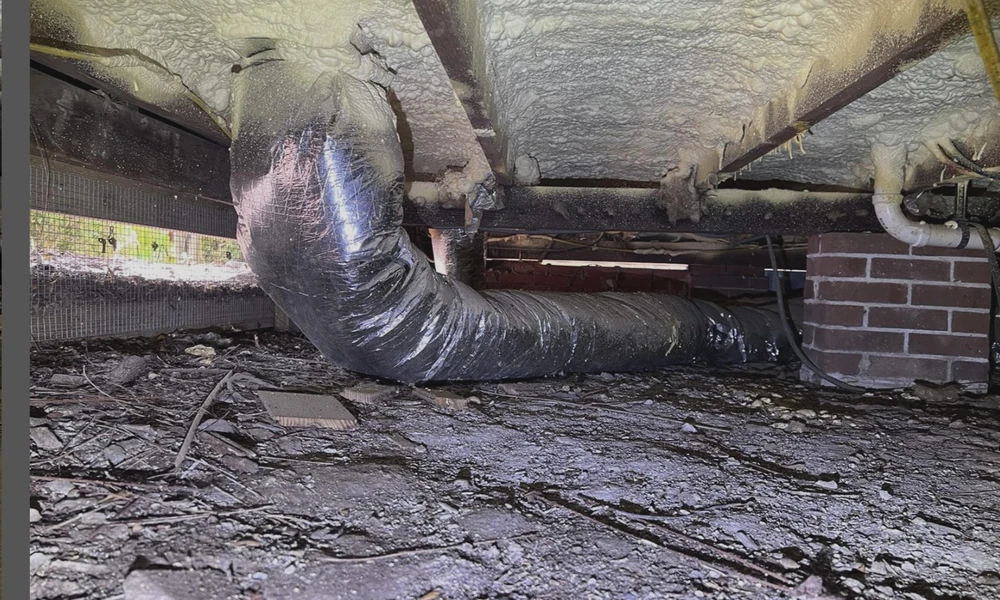
Drive through Mid-City, Bywater or Algiers and you will see thousands of houses resting two to four feet off the ground on brick piers. Builders raised shotgun singles, Creole cottages and plenty of later ranch homes this way to keep floors above standing water and let breezes pass beneath them. Central air came much later. When it did, installers needed a route for the ductwork, and the open space under the floor was the easiest place to hang it. That choice, made decades ago in many homes, still decides how comfortable those rooms feel on an August afternoon.
Homeowners who call Ben’s AC about a back bedroom that never cools down or a musty smell when the system starts often find that the problem is under the floorboards, not in the condenser or air handler. The New Orleans team works on air conditioning, heating and air ducts around the clock, covering Uptown and Metairie as well as Gretna and Algiers on the West Bank. Under a raised house, they see ducts dealing with some of the harshest conditions in the region.
The Air Below the Floor Is Never Gentle
The space under a pier house is basically outdoors. On a summer day the air down there is hot and heavy, and the dew point often stays in the mid seventies. A supply duct carrying cooled air at around 55 degrees passes through that air all day. Any part of the duct surface that drops below the dew point will collect water, the same way a glass of iced tea does on a porch.
Well-wrapped ducts with an intact vapor jacket stay dry on the outside. Problems begin with small flaws. Torn insulation, a jacket chewed open, a section squeezed flat by a strap pulled too tight, or a gap where the duct meets the register boot all expose cold metal or thin insulation to humid air. Condensation forms, drips and soaks into nearby insulation, which loses much of its insulating value once wet. The wet section gets colder, sweats more and starts to sag. Over a few summers this cycle can rust metal boots, stain subfloors, soften joists and support mold on the wood above.
Leaks That Breathe Swamp Air Into the House
Every duct system leaks somewhat, but location determines how much those leaks cost. When a supply duct leaks under a raised house, the air you paid to cool goes straight into the yard. Rooms at the far end of a long shotgun layout feel this first because their air travels through the most duct and joints.
Return leaks are a bigger concern in this climate. A return duct runs under negative pressure, so any opening pulls in whatever air is nearby. Under the house, that means damp air mixed with soil smells, dust and sometimes animal odors. LSU AgCenter’s guidance on duct system design links return leakage to higher indoor humidity, dirtier coils and reduced cooling capacity. This explains why some homes feel clammy even when the thermostat shows a reasonable temperature. The system is constantly drying air that leaked in from under the floor.
Visitors That Move In Underneath
Crawl spaces attract animals, and ductwork offers warmth. Rats, opossums and stray cats often find flexible duct to be a cozy place to rest, especially as nights cool in late fall and heating cycles warm the metal and insulation. They tear through the outer jacket, compress insulation into nests and sometimes pull a run loose from its fitting entirely.
A disconnected duct under the house can go unnoticed for months. The register upstairs still blows a little air from leakage elsewhere, so the room becomes merely uncomfortable rather than clearly broken. Meanwhile, a strong stream of heated or cooled air empties into the space beneath the floor.
When Water Rises Past the Ducts
Heavy downpours in New Orleans can flood streets and yards within an hour, and ducts hanging under a raised house are the lowest part of the system. Flexible duct and fiberglass duct board that have been submerged usually need replacing because the insulation holds contaminated water and rarely dries fully. Sheet metal trunks can sometimes be cleaned, sanitized and re-insulated, but that decision is best made after a close inspection. Running the system before checking the ducts can spread whatever the floodwater left inside throughout the house.
Clues You Can Catch From Inside
Most duct problems under a raised house show signs before anyone crawls underneath to look. Some common clues include:
- Rust spots or water stains on floor registers, or a register that feels damp during cooling season
- One or two rooms, often at the back of the house, that are always warmer than the rest
- A musty smell that appears when the system starts and fades after a few minutes
- Indoor humidity that remains above 60 percent despite long run times
- Dark streaks around register edges or dust building up much faster than before
- Scratching sounds, new odors or rising energy bills without changes to the equipment
None of these confirms a duct problem alone, but two or three together strongly suggest checking under the floor.
What a Proper Look Underneath Involves
A thorough duct inspection under a pier house means following each run from the air handler to every register with a light. The technician checks that flexible duct is supported every few feet and not drooping into loops that restrict airflow. Joints should be sealed with mastic, not old cloth tape that dries out in Louisiana heat. Insulation jackets should be intact, boots sealed tightly to the subfloor, and every branch should connect to something.
Measurements are also important. Comparing air temperature at the return and at each register shows where cooling is lost. A static pressure reading reveals whether the system is choking on undersized or crushed duct. In homes with stubborn humidity, a duct leakage test can measure the total leakage instead of relying on guesses.
Fixes That Range From Small to Structural
Many repairs are straightforward. Sealing joints with mastic, rewrapping damaged insulation with a continuous vapor jacket, adding proper straps and reconnecting loose runs can noticeably improve comfort within a day. Replacing damaged flexible duct with insulated rigid metal for the main trunk improves airflow and resists both crushing and animals. Blocking easy entry points around the base of the house with sturdy wire mesh helps keep animals from returning.
Bigger changes involve moving ducts out of the crawl space completely. Some homeowners route new supply ducts through interior chases or dropped soffits, keeping cooled air within the living space where any leaks stay indoors. Others in homes with tall ceilings and difficult layouts choose ductless units for the rooms the old system never reached well. Sealing in the crawl space, which works in some regions, is rarely practical for a home on open piers in a flood-prone area, so the focus usually stays on the ducts rather than the space around them.
Cooler Months Make Better Crawling Weather
Late fall and winter are the best times to address ductwork under a raised house. Temperatures under the floor are bearable, mosquitoes have mostly gone, and the system isn’t running long enough for a few hours of downtime to matter. Problems found now can be fixed calmly, rather than in the middle of a heat wave when every contractor in the city is booked. By the time the humid summer air returns, a home whose ducts have been sealed, supported and properly insulated can handle the heat in a very different way.